Be yourself; Everyone else is already taken.
— Oscar Wilde.
This is the first post on my new blog. I’m just getting this new blog going, so stay tuned for more. Subscribe below to get notified when I post new updates.
A blog about my experiences learning about the solar system
Be yourself; Everyone else is already taken.
— Oscar Wilde.
This is the first post on my new blog. I’m just getting this new blog going, so stay tuned for more. Subscribe below to get notified when I post new updates.
When considering the likeliest hosts for extraterrestrial life in our very own system, Europa surely is near the top of possible candidates. One of Jupiter’s 79 (!) moons, it possesses the smoothest surface of any celestial body in the solar system. Because of this and imaging from probes, scientists have hypothesized that Europa has a vast subsurface saltwater ocean about 100km thick covering the entire planet. This has led to discussion about the strong possibility of life evolving here; life could exist in a manner similar to deep sea hydrothermal vents on Earth. Additionally, clay-like minerals have been found on Europa which are strongly connected to the proliferation of organic life. The multiple contributing factors to the possibility of life on Europa have led to countless different theories on the nature of life on Europa. Could it be hydrothermal vent dwelling organisms? Or perhaps plankton-like creatures closer to the surface? Or maybe an entirely new form of life that has arisen from processes extremely different to those on Earth? The exciting possibilities of Europa’s ocean has ensured funding for many missions in the near future, which hopefully will provide us with more answers.

It’s no secret Pluto has been out of the privileged circle of celestial bodies to be considered planets for over a decade now. But many don’t realize what events led to this ousting, and the reasonings for doing so.
Pluto had long since been considered a planet since its discovery in the 1930’s. Yet starting in 1992, discoveries were made which put this status in jeopardy. Several celestial objects were found in the Kuiper belt which were as large, if not larger, than Pluto. Naturally this lead to the question: should these be planets? Or should Pluto not be a planet?
This debate was fueled even more by the 2005 discovery of Eris, a dwarf planet in the scattered disc which was found to be 27% more massive than Pluto. This was the final nail in the coffin for Pluto’s membership to the planet club, with the International Astronomical Union establishing guidelines on what is considered a planet that explicitly dropped Pluto from the roster in 2006 at their General Assembly. Although Pluto may not be batting in the big leagues anymore, it will always be a planet in my heart.

Venus is known to be an extremely hostile environment, with sulfuric clouds, extremely hot temperatures, and immense atmospheric pressure making it a less-than-ideal destination for colonization. But to what extent have we explored its surface? Have we landed rovers on it?
Surprisingly enough, we have landed quite a few rovers on its surface! The Russian space program Venera, which operated from 1961 to 1984, saw ten successful landings on Venus’ surface (two of which were also part of 1984’s Vega mission). As expected, these landings were extremely short lived, with their lifespans ranging from around twenty minutes to a few hours. Yet in spite of this, the Russians were able to gather valuable date (and a few photos as well!). It’s fascinating to think they were able to build machines that could operate (albeit for a short time) in such hostile conditions. It makes you wonder what kind of technology we could develop in the future in order to further unlock Venus’ secrets.
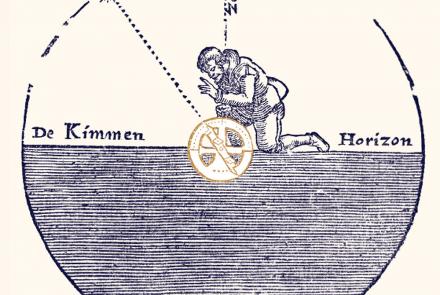
Like many other technologies, one might assume that celestial navigation has only been truly developed efficiently in recent times with our technology. But you may be surprised to know that many of the techniques we use today were invented centuries ago, or even thousands of years!
Celestial navigation is the practice of using angles between celestial bodies and the earth’s horizon to determine one’s location, especially at sea. Tools like sextants are especially useful for this, and have been around for centuries- there have been documented usages of such a tool going as far back as the 1500s. It makes sense that such a simple yet effective tool has remained a consistently useful tool for navigation; in modern times, it provides a crucial backup if electronic navigation systems should encounter difficulties. In fact, the U.S. Naval Academy (among other institutions) has recently reimplemented celestial navigation courses, recognizing its longstanding usefulness.
Celestial navigation has been a mainstay of exploration for ages, and the main principles have largely stayed the same.
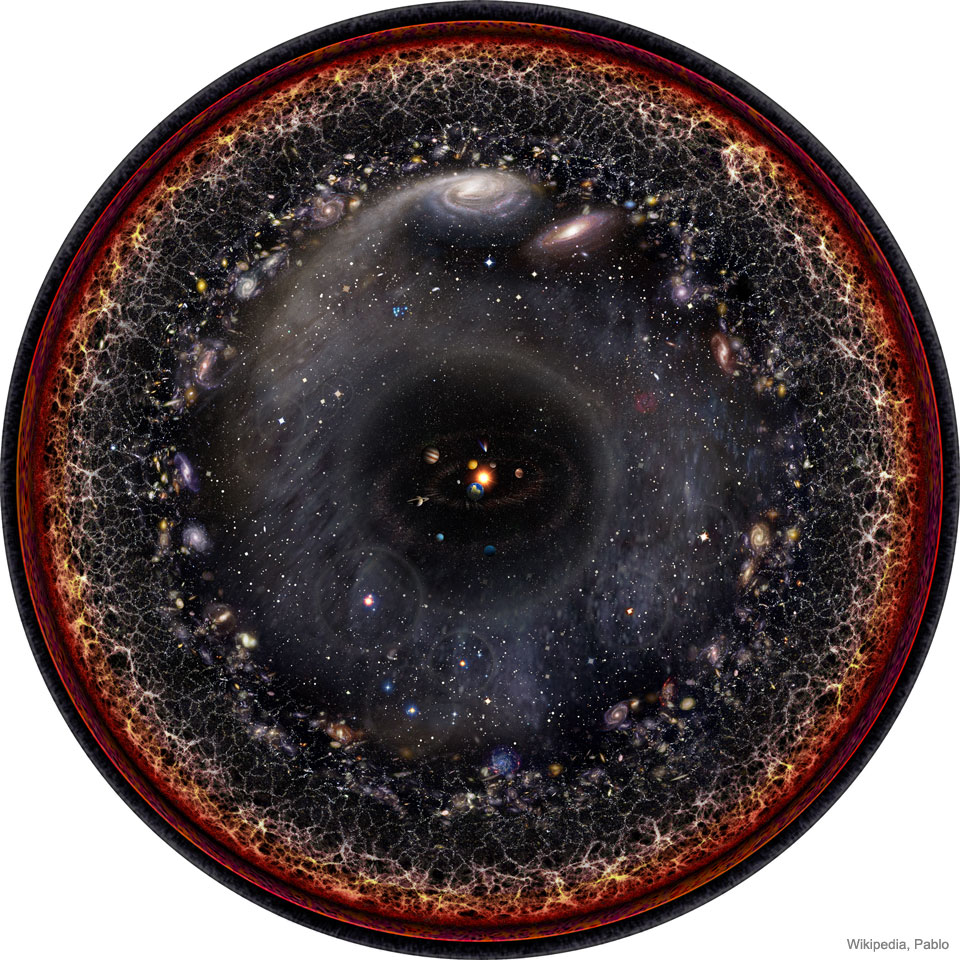
It is hard for us to truly fathom the sheer size of our universe, this is clear- the distances involved are simply too big to comprehend with just the human mind. But we have begun to understand the nature of this size, and order the magnitudes of the universe in ways we can understand. The general set of references used is thus:
The size can be overwhelming at times- but with ordering and establishing references, one can surmise the general size of the universe quite easily!

This is an example post, originally published as part of Blogging University. Enroll in one of our ten programs, and start your blog right.
You’re going to publish a post today. Don’t worry about how your blog looks. Don’t worry if you haven’t given it a name yet, or you’re feeling overwhelmed. Just click the “New Post” button, and tell us why you’re here.
Why do this?
The post can be short or long, a personal intro to your life or a bloggy mission statement, a manifesto for the future or a simple outline of your the types of things you hope to publish.
To help you get started, here are a few questions:
You’re not locked into any of this; one of the wonderful things about blogs is how they constantly evolve as we learn, grow, and interact with one another — but it’s good to know where and why you started, and articulating your goals may just give you a few other post ideas.
Can’t think how to get started? Just write the first thing that pops into your head. Anne Lamott, author of a book on writing we love, says that you need to give yourself permission to write a “crappy first draft”. Anne makes a great point — just start writing, and worry about editing it later.
When you’re ready to publish, give your post three to five tags that describe your blog’s focus — writing, photography, fiction, parenting, food, cars, movies, sports, whatever. These tags will help others who care about your topics find you in the Reader. Make sure one of the tags is “zerotohero,” so other new bloggers can find you, too.

 Danny's Solar System Blog